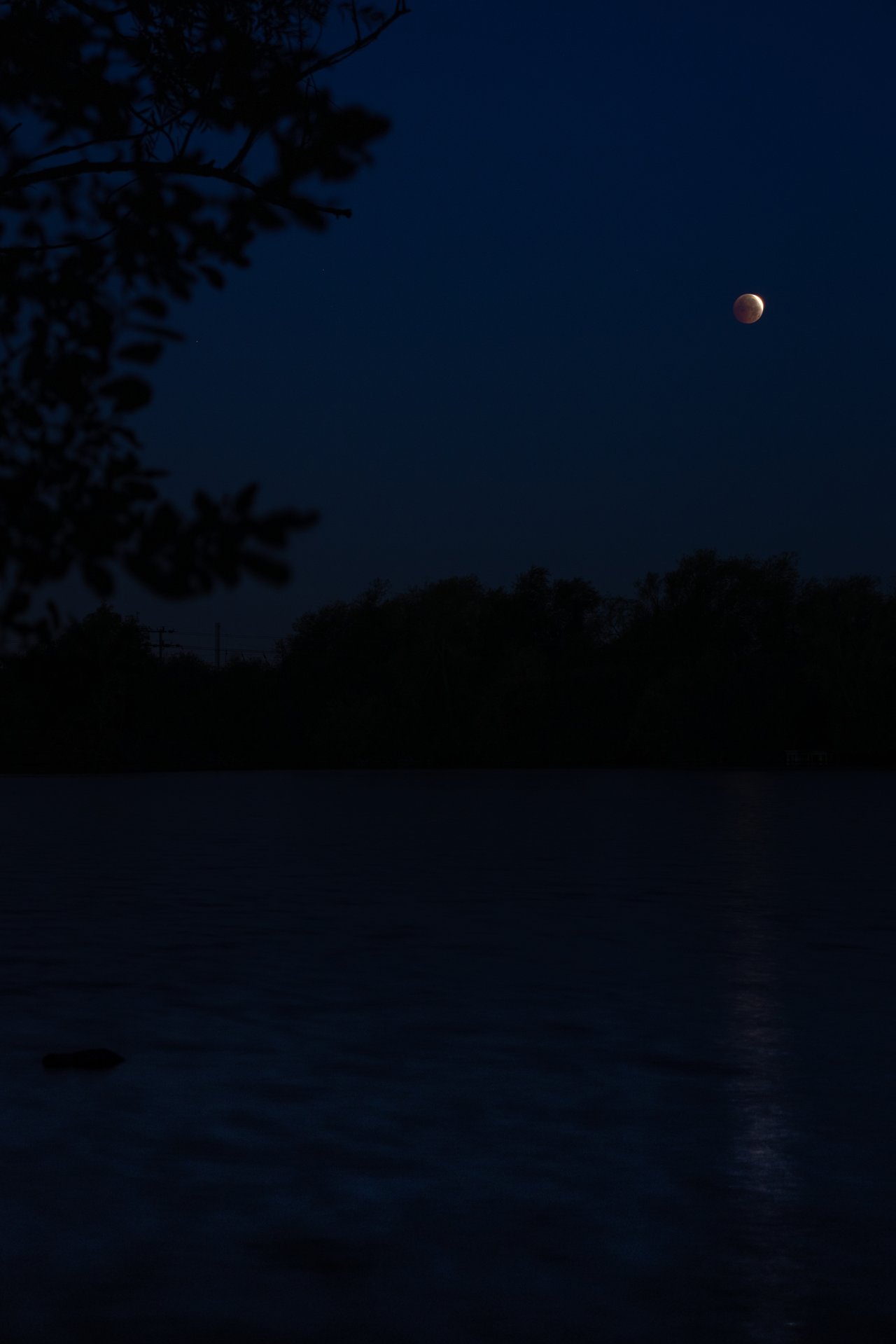
Another eclipse
Published: September 1, 2026
Did you know that solar eclipses are often followed right away by a lunar eclipse and vice-versa? This is because the eclipse window, the time period with the right conditions for eclipses to happen, lasts longer than the lunar phase. An eclipse happens when the three celestial bodies align, but this doesn't happen every lunar phase because the Moon's orbital plane around the Earth is tilted relative to the Earth's orbital plane around the Sun (called the ecliptic). Two planes intersect each other in a straight line, and where the line points relative to the Sun changes as the Earth goes around it. Only when that line points at the Sun within a certain narrow threshold and it is New Moon or Full Moon can an eclipse happen. And when it does, the Moon often has enough time to go halfway around before this alignment breaks.